
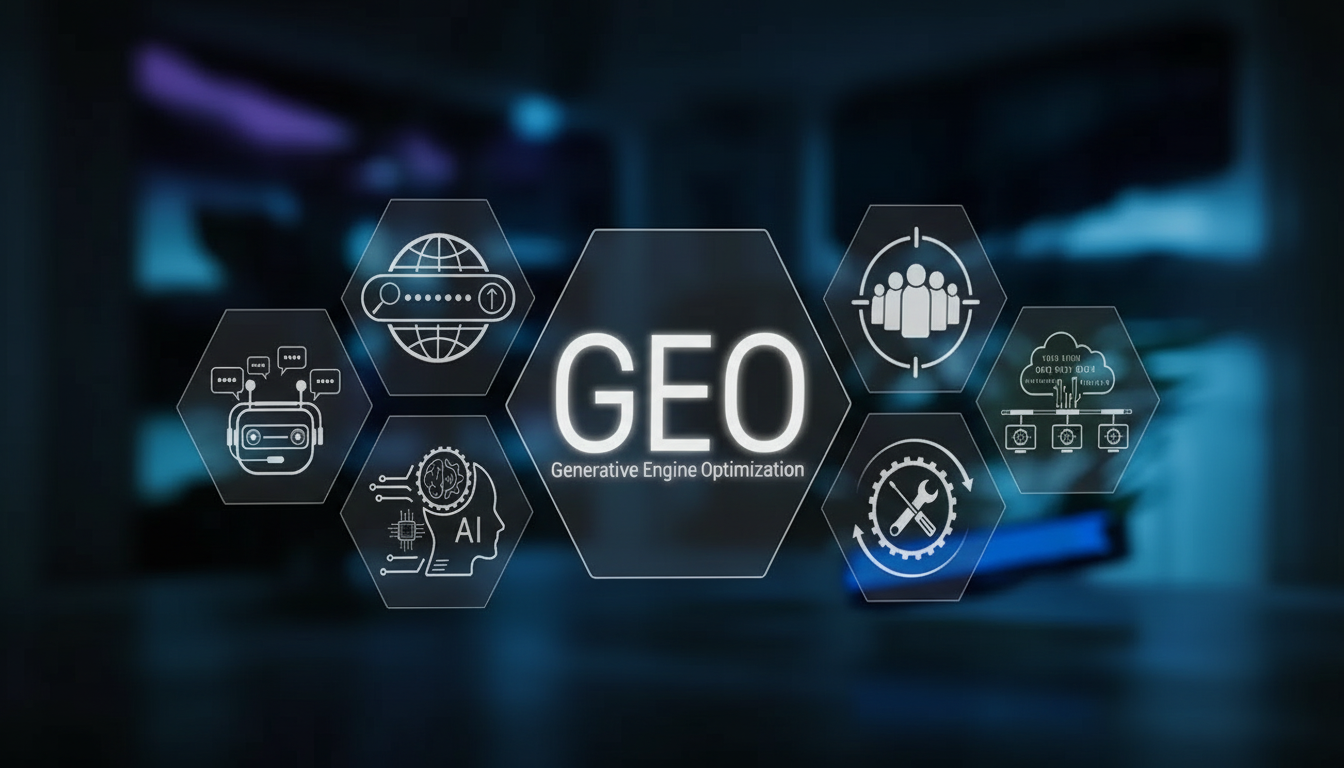
O Generative Engine Optimization (GEO) represents the next phase of search visibility in a world where AI systems increasingly deliver answers directly to users. Instead of competing for a position on a traditional results page, GEO focuses on positioning your brand as the trusted source that AI systems rely on when generating responses in tools like ChatGPT, Perplexity, Gemini, and AI-powered search summaries.
Understanding Generative Engine Optimization
Generative Engine Optimization is the discipline of shaping content so artificial intelligence systems can easily access it, interpret it accurately, and confidently reuse it in their responses. The objective is no longer limited to rankings or clicks. The real goal is to be referenced, summarized, or implicitly relied upon when an AI produces a final answer. GEO builds on the foundations of SEO but adapts them for large language models, retrieval systems, and AI-driven interfaces that prioritize clarity, context, and trust over simple keyword matching.
“The future of search isn’t ranking links—it’s becoming the answer.”
Why GEO has become essential
Search behavior has fundamentally changed. Users are moving away from browsing multiple links and toward asking a single question and receiving a complete, synthesized answer. In this environment, the AI interface becomes the primary touchpoint between users and information.
Brands that are not included in these AI-generated responses lose visibility, even if their websites are well-designed and technically optimized. GEO helps businesses remain discoverable by ensuring their content is recognized as reliable, relevant, and worth incorporating into AI-generated outputs.
GEO versus traditional SEO
Traditional SEO is designed for ranking systems that evaluate pages using signals such as backlinks, keyword placement, and technical performance. GEO, by contrast, optimizes for generative systems that scan, compare, and compress information from many sources into a single conversational response.
Rather than focusing solely on keywords and rankings, GEO emphasizes:- Clear, machine-readable structure and language
- Clear, machine-readable structure and language
- Strong alignment with user intent and context
| Aspect | SEO | GEO |
|---|---|---|
| System Type | Ranking-based search engines | Generative AI answer systems |
| How Content Is Used | Pages are indexed and ranked individually | Information is scanned, compared, and compressed |
| Optimization Focus | Keywords, backlinks, technical performance | Structure, clarity, credibility, and context |
| Content Evaluation | Algorithm scores pages against ranking signals | AI evaluates usefulness across multiple sources |
| User Outcome | User clicks a ranked link | User receives a direct conversational answer |
| Visibility Goal | Appear on search result pages | Be present inside the generated answer |
Core foundations of effective GEO
Several principles consistently influence whether content is selected by generative engines:
Depth and authority
Content that thoroughly explains a topic, defines its scope, and addresses related questions is more likely to be considered a dependable source.
Logical structure
Clear headings, well-organized sections, internal links, and consistent formatting help AI systems quickly identify and extract relevant information.
Entity and brand consistency
Using consistent brand names, descriptions, and associations across your site and the wider web helps AI systems connect your business to specific subjects, industries, and locations.
How AI systems interpret content
Generative engines typically operate using a combination of trained knowledge and real-time content retrieval. When a user submits a query, the system identifies key topics and entities, gathers supporting material from trusted sources, and then synthesizes an answer.
Content that is clear, factual, well-structured, and aligned with recognized entities has a higher likelihood of being selected during this retrieval and synthesis process. GEO strengthens these signals so your pages are easier to identify and reuse.
Content practices that support GEO
Content that performs well in generative environments often shares these traits:
Focused completeness: Each page owns a single topic and covers it thoroughly without drifting into unrelated areas.
Evidence-driven writing: Clear data points, examples, and references increase credibility and usability for AI-generated summaries
Direct communication: Important definitions, conclusions, and insights are stated explicitly rather than implied or hidden in storytelling.
Structural and technical considerations
From a technical standpoint, GEO prioritizes semantic clarity over keyword repetition. Proper heading hierarchies (H1 through H3), concise sub-sections, tables, and bullet lists make it easier for AI systems to extract meaningful segments.
Schema markup further enhances this process by labeling content types such as articles, FAQs, products, and organizations. This structured data helps generative engines integrate your content into their internal knowledge frameworks with greater confidence.
Aligning with user intent
Generative engines aim to satisfy intent in a single response. Content must therefore be designed around the underlying purpose of a query, whether it is informational, exploratory, navigational, or transactional.
Informational pages benefit from clear definitions and explanations. Investigative content should compare options and outline considerations. Transactional or navigational pages should present concise, actionable details that can be easily summarized by AI systems.
The importance of off-site signals
GEO extends beyond your website. Mentions in credible publications, consistent directory listings, professional profiles, and structured knowledge-base entries all contribute to how AI systems understand your brand.
When off-site signals reinforce what your website communicates, generative engines gain stronger confidence in associating your business with specific topics and expertise areas.
A practical GEO approach for businesses
An effective GEO strategy typically includes:
- Identifying the questions and topics your audience asks AI tools within your industry
- Creating or refining content into well-structured, authoritative resources around those topics
- Strengthening internal links and applying appropriate schema markup
- Building consistent off-site brand signals through profiles, partnerships, and thought leadership
As AI continues to reshape how people discover information, Generative Engine Optimization ensures your brand remains visible where decisions are increasingly made: inside the answers themselves, not just the links that follow.